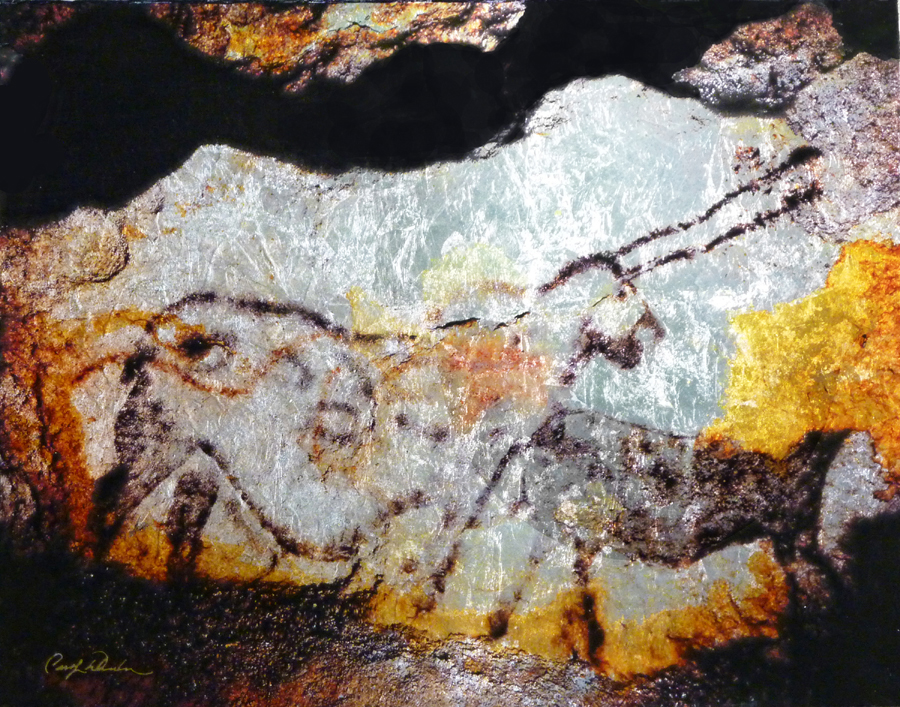
by Carolyn Wheeler | Feb 19, 2013 | Lascaux
The Unicorn The name “Unicorn” was given to this famous enigmatic beast because although he clearly has two horns, they are so long he is accused of being a mythical creature. His extended posture at the end of the pack leads one to imagine him encouraging the others forward. He is presented here in real silver and 24k gold. 11″ x...
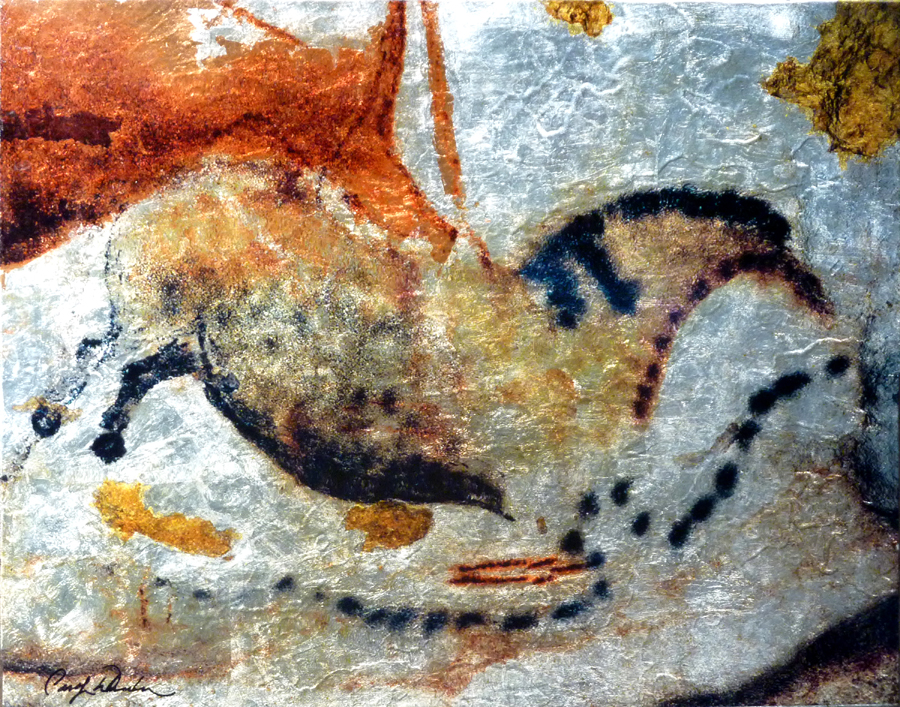
by Carolyn Wheeler | Feb 19, 2013 | Lascaux
The First Chinese Horse From the Panel of Chinese Horses, this robust polychromatic example of expressionism is one of the highlights of Lascaux’s Axial gallery. The interpretation of the dots and numerous other symbols associated with this equid continue to mystify. Presented here in real silver and 24k gold. 11″ x...
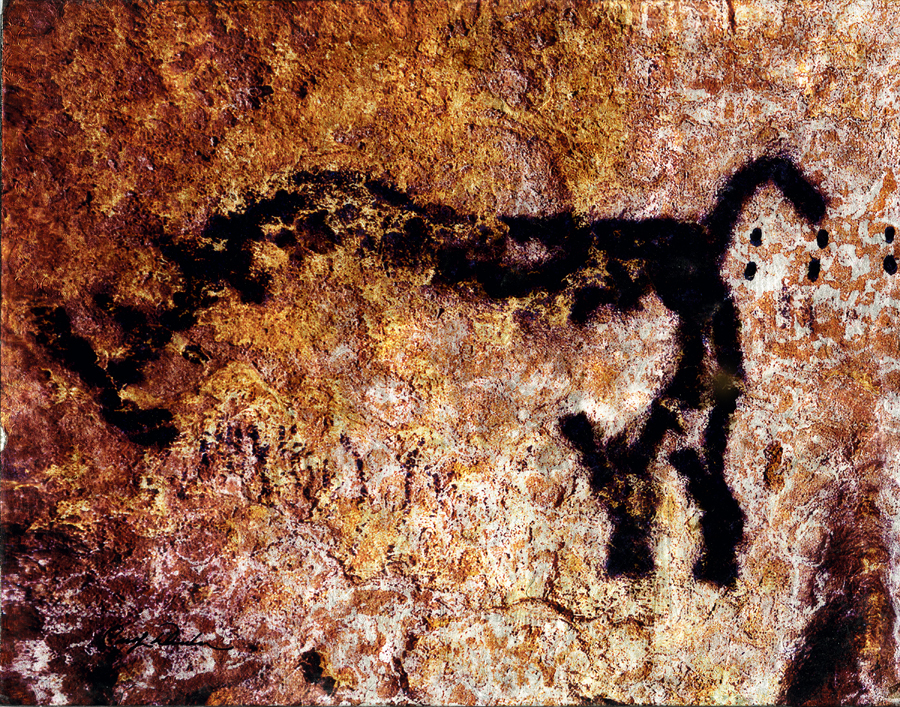
by Carolyn Wheeler | Feb 19, 2013 | Lascaux
The Rhinoceros Chilotherium is an extinct genus of rhinoceros endemic to Eurasia and Asia 13.7—3.4 million years ago. It was a large, robust animal weighing between 1 and 2.5 tons. They were known for their large, protruding lower canine teeth as depicted in this cave painting from the Panel of the Wounded Man, created here in real silver and 24K gold. 11″ x...

by Carolyn Wheeler | Feb 19, 2013 | Lascaux
The Black Stag This extinct deer (genus Megaloceros) was found throughout Eurasia from the late Pliocene to the Late Pleistocene eras. The thrown back head, open mouth and rolled-back eye are distinctive signs of rutting. Presented here in silver and 24k gold. 11″ x...
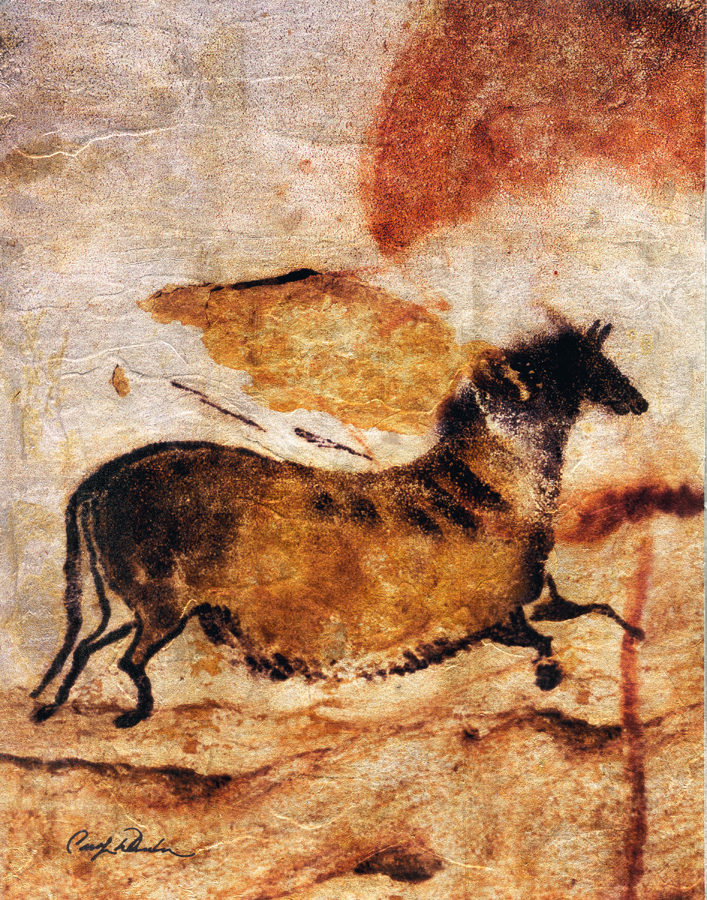
by Carolyn Wheeler | Feb 19, 2013 | Lascaux
The Third Chinese Horse This Chinese horse is distinguished by his attentive upright ears, the exceptional precision of his painted coat and the entertaining position of his body. The area of calcite missing at his shoulder gives the appearance of a wing which has earned him the nickname “Pegasus”. He is presented here in pure silver and 24K gold. 11″ x...